

A team including SCC researchers outlines in the paper An ontology-based description of nano computed tomography measurements in electronic laboratory notebooks how, using the example of synchrotron-based nano-CT measurements, experimental metadata can be captured and semantically annotated in a FAIR-compliant manner from the very beginning. This fundamentally supports all downstream scientific processes involving research data. The paper was published in the prestigious journal “Nature Scientific Data”.
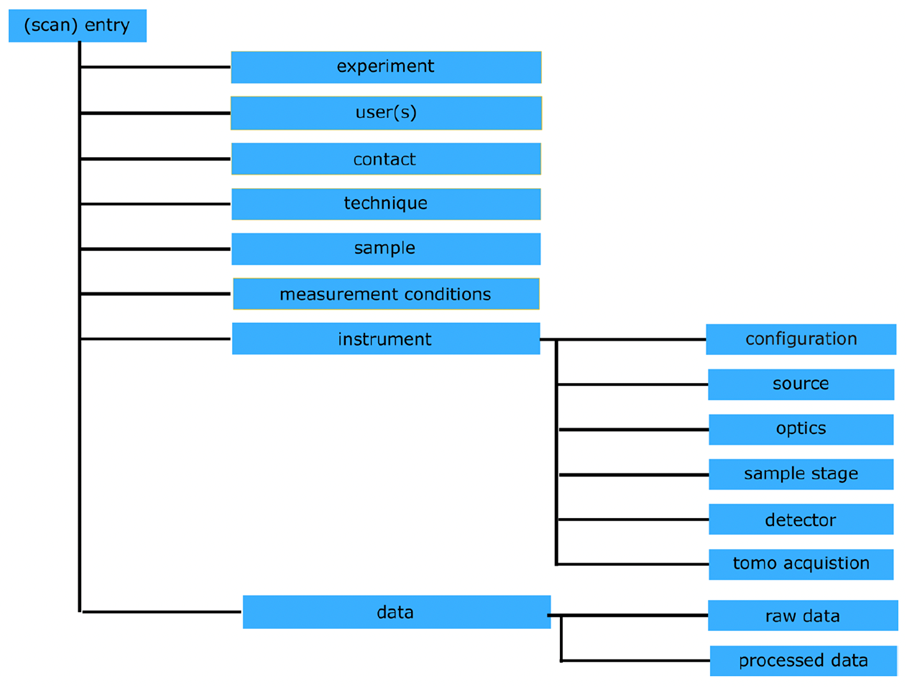
In research data management, the problem is that high-quality, fully FAIR-compliant research metadata is difficult to generate, especially for complex scientific measurements. This requires workflows that define early, standardized, semantic, and user-friendly collection of research data, as well as tools that support these processes. This is precisely where the working group’s paper comes in: It describes an approach to capturing research data with FAIR-compliant metadata from the outset by embedding the scientific workflow directly into semantically annotated knowledge graphs. The authors initiate the creation of a schema (s. figure) at the very beginning of the scientific process and subsequently implement this schema in the electronic lab notebook platform Herbie.
This approach ensures that metadata is automatically validated, inputs are semantically annotated, and data is captured in a user-friendly manner . In this way, all FAIR principles can be automatically fulfilled.
Using the example of synchrotron-based nano-CT measurements at a beamline, the paper demonstrates how complex device and configuration metadata can be captured completely and consistently. The system generates a user-friendly interface from the semantic descriptions and enables structured use of the data via SPARQL queries.
Publication: An ontology-based description of nano computed tomography measurements in electronic laboratory notebooks